Root-cause answers for food reactions
Food sensitivities & intolerances, finally explained.
Get clarity on the foods your body is struggling to tolerate. Reactions that surface hours or days after eating are signals worth decoding, not restrictions to live with forever.

Food sensitivities
When food starts triggering symptoms you can’t explain.
Food sensitivities and food intolerances often show up quietly and unpredictably. Symptoms may affect digestion, energy, mood, skin, or sleep, and they can appear hours or even days after eating. Because reactions are often delayed, it can be difficult to connect symptoms to specific foods on your own.
This does not necessarily mean your body is overreacting. It may mean a food is not being tolerated well and that digestion, gut health, or immune balance needs more support.
Understanding reactivity
What are food sensitivities?
Food sensitivities are delayed reactions that occur when the body struggles to process certain foods. Unlike food allergies, which cause immediate immune reactions, sensitivities tend to build over time and create low-grade inflammation.
They may involve immune pathways such as IgG responses, digestive enzyme insufficiency, or gut barrier dysfunction. Because multiple systems can be involved, symptoms often feel widespread rather than isolated to digestion.
Know the difference
Food sensitivities, food intolerances, and food allergies.
These three reactions are not the same, and understanding the difference helps ensure the right type of care. Sensitivities and intolerances often improve when the underlying digestive or inflammatory drivers are addressed.
Food allergies
Immediate immune reactions that can be severe and even life-threatening. Allergies call for conventional allergy care and strict avoidance of the trigger.
Food sensitivities
Delayed reactions, often involving IgG immune pathways, that build over time and create low-grade inflammation across multiple body systems.
Food intolerances
Trouble processing certain foods, often from digestive enzyme insufficiency. Generally delayed, and they often improve once digestion is supported.
Symptoms
How food sensitivities can affect the body.
Food sensitivities rarely affect just one system. You may notice a combination of symptoms, including:
Digestive changes
Bloating, gas, diarrhea, constipation, or inconsistent digestion.
Fatigue & brain fog
Fatigue or brain fog, especially after meals.
Headaches
Headaches or migraines that seem to follow eating patterns.
Joint discomfort
Joint discomfort or generalized inflammation.
Skin concerns
Skin concerns such as acne, eczema, or hives.
Mood changes
Mood changes, anxiety, or irritability.
Congestion
Congestion or sinus symptoms that linger.
Poor sleep
Poor sleep or waking up feeling unrested.
Root causes
How do food sensitivities develop?
Food sensitivities rarely have a single cause. They tend to develop when digestion, gut integrity, or immune regulation becomes strained over time — including the increased intestinal permeability known as leaky gut. Contributing factors may include:
Increased intestinal permeability
A strained gut barrier lets larger particles interact with the immune system, priming new reactions.
Gut microbiome imbalances
When protective bacteria are crowded out, digestion and immune regulation both suffer.
Digestive enzyme insufficiency
Food that is not fully broken down is far more likely to provoke symptoms downstream.
Inflammatory or processed foods
Repeated exposure to inflammatory or processed foods keeps the gut lining irritated.
Hormonal shifts or chronic stress
Stress hormones change how the gut moves, secretes, and defends itself.
Mold or environmental toxins
Environmental exposures such as mold or toxins add to the body's total inflammatory load.
Previous infections or unresolved gut inflammation
Old infections and lingering inflammation can leave the gut more reactive than before.
Testing & insight
Flora Naturopathics identifies what’s driving reactivity.

We focus on identifying patterns behind food reactions and understanding what your body needs to restore tolerance. This often begins with guided elimination and structured reintroduction, and when helpful, targeted testing adds clarity so next steps are intentional rather than restrictive.
- 01
Eliminate
IgG/IgA food sensitivity panels across common trigger foods
- 02
Observe
Stool testing to assess digestion and microbial balance
- 03
Reintroduce
Nutrient testing when deficiencies may be contributing
Our approach
How we support long-term tolerance.
The goal is not permanent avoidance. Flora’s naturopathic treatment helps your body tolerate food more comfortably again, and as your body stabilizes, foods are reintroduced gradually so eating can feel flexible rather than restrictive.
Nutrition strategies that reduce inflammation and support the gut lining
Digestive support when breakdown or absorption is impaired
Microbial balancing when gut imbalance is part of the picture
Nervous system support when stress is affecting digestion
Guided elimination and structured reintroduction, so reactions can be observed in a meaningful way
Patient feedback
Hundreds of patients, in their own words.
4.9/5
from 213 Google reviews


Your symptoms are signals
Let's turn them into a plan.
Book your first telehealth visit and start uncovering the root causes behind how you feel, with a plan built around your history, labs, and goals.
Free e-books
Doctor-written guides you can start reading today.
Download free e-books from Flora's doctors and take the first steps toward better health at home.

Cleaning Up Your Environment & Optimizing Your Fertility
by Dr. Shannon Iselin
A practical guide to reducing everyday environmental toxins while preparing your body for a healthy pregnancy.
Get the free e-book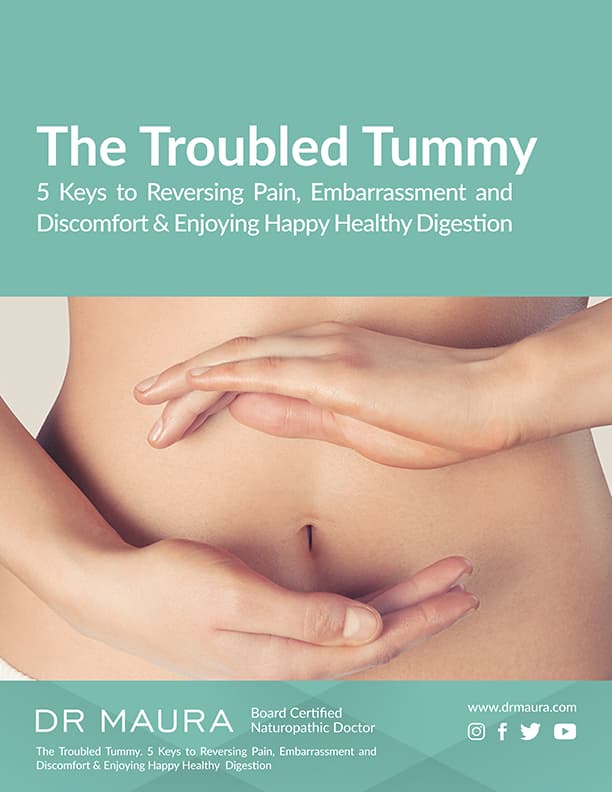
The Troubled Tummy
by Dr. Maura Henninger
Five keys to reversing pain, embarrassment, and discomfort so you can enjoy happy, healthy digestion.
Get the free e-book