(646) 760-6627
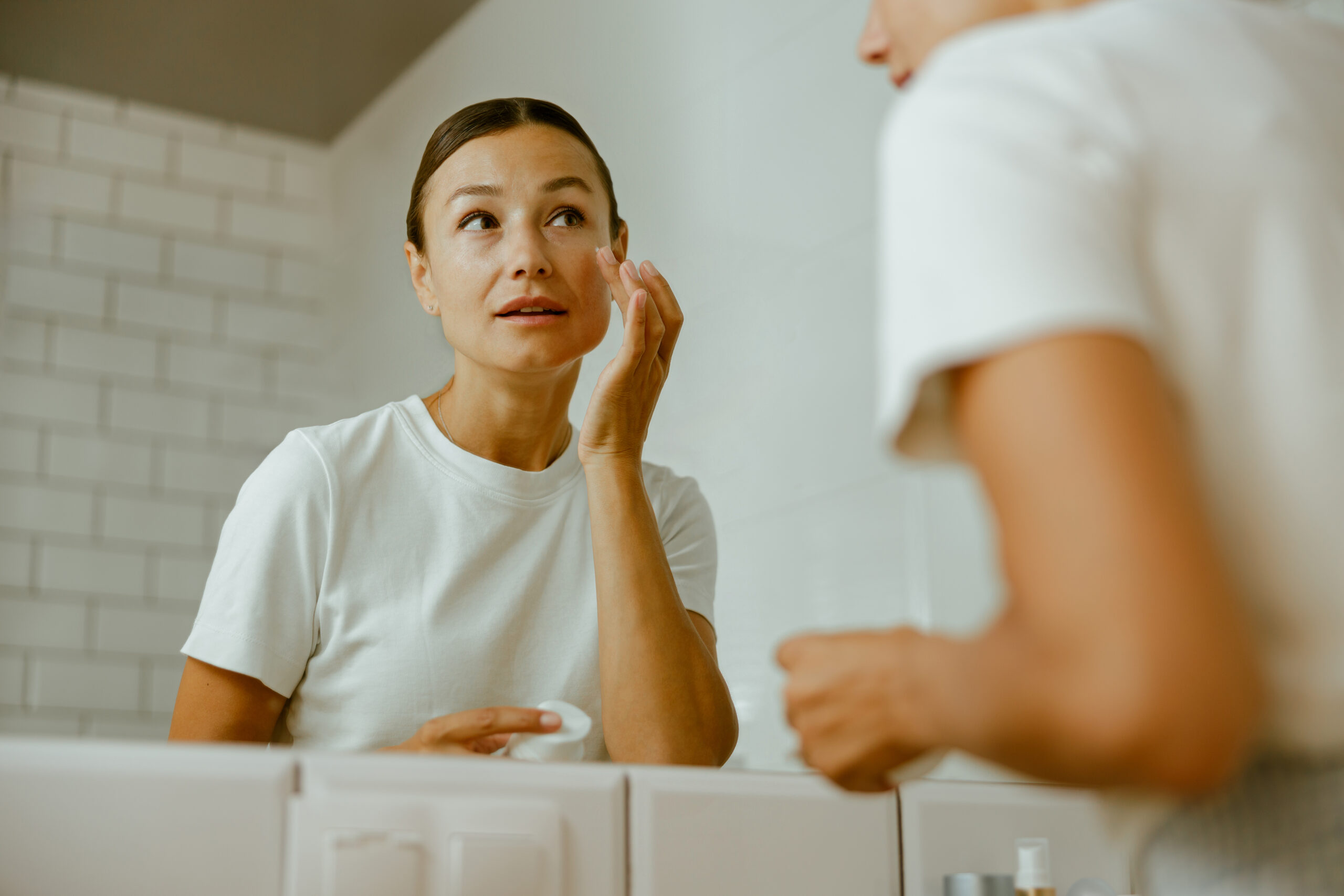
Why Am I Breaking Out in My 30s and 40s?
Get Started
Written by - Dr. Maura Henninger (ND) Flora Naturopathics
You are not imagining it. Acne in your 30s and 40s can feel more stubborn, more painful, and more personal than the breakouts you may have had when you were younger.
At this age, acne often feels confusing because it can show up alongside other changes in your body. Your cycle may be different. Your stress may be higher. Your sleep may be lighter. Your digestion may feel off. Your skin may feel dry and sensitive, but still break out. The products that once worked may suddenly feel too harsh, while heavier creams and makeup seem to clog your pores.
This is why adult acne can feel so defeating. You are not just dealing with a few pimples. You may be dealing with painful bumps along the chin or jawline, inflamed cysts that take weeks to heal, dark marks that linger, or breakouts that seem to flare no matter how carefully you wash your face.
Clinical acne affects 26% of women ages 31 to 40 and 12% of women ages 41 to 50.
That matters because many women feel embarrassed when acne returns or appears for the first time in adulthood. But adult acne is common, and it is not a sign that you are dirty, careless, or failing at your skincare routine. It is often a sign that the body is asking for a deeper look.
Adult Acne Can Feel Different Than Teenage Acne
Teenage acne is often associated with puberty, oily skin, and clogged pores. Adult acne can have those same features, but it often behaves differently.
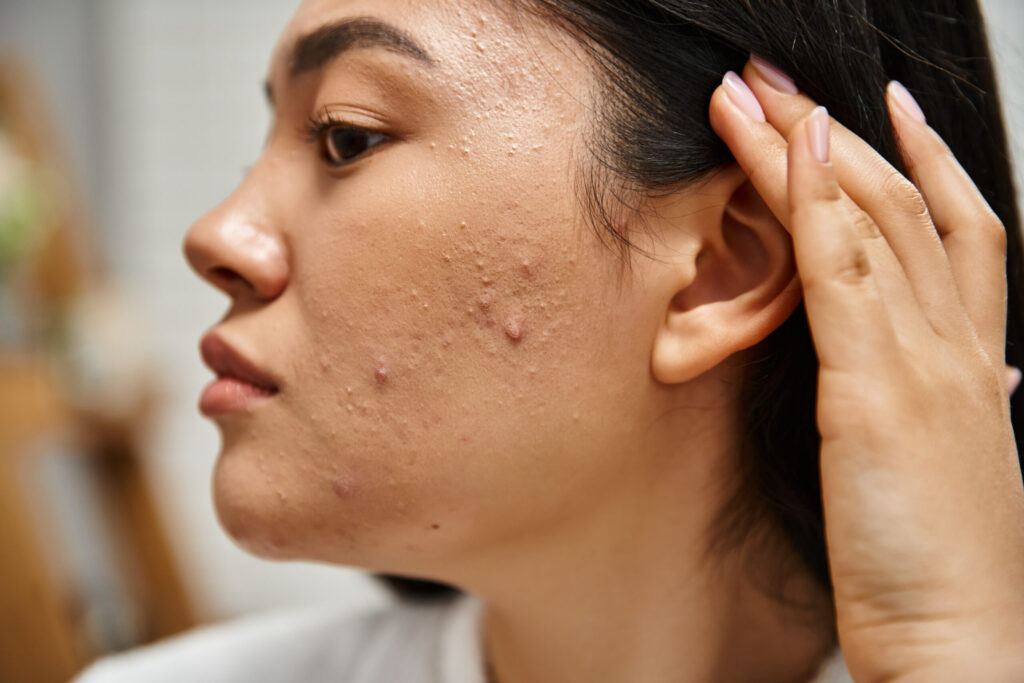
In your 30s and 40s, breakouts may be:
- Deeper, more tender, or cystic
- Concentrated around the chin, jawline, cheeks, or neck
- Worse before your period
- More likely to leave dark marks or scarring
- Triggered by stress, poor sleep, travel, or cycle changes
- Paired with dry, reactive, or irritated skin
- Resistant to the products that used to work
Acne forms when pores become clogged with oil, dead skin cells, bacteria, and inflammation. In adult women, hormones, stress, blood sugar, gut health, inflammation, and the skin barrier can all influence that process. But the question is rarely just, “What should I put on my skin?”
The more helpful question is:
Why is my skin suddenly responding this way?
Common Reasons You May Be Breaking Out in Your 30s and 40s
Adult acne is often multifactorial. That means there may not be one single cause. Hormones, stress, blood sugar, gut health, inflammation, aging skin, and skincare habits can all overlap.
1. Hormonal Changes
Hormones are one of the most common drivers of adult acne.
Hormonal acne often appears around the chin, jawline, lower cheeks, or neck. It may flare before your period or feel deep and tender beneath the skin. You may also notice other signs of hormone shifts, such as PMS, irregular cycles, breast tenderness, mood changes, unwanted facial hair, hair thinning, or changes in weight.
Androgens are often part of this picture. These are hormones that all women have, including testosterone and DHEA. They support normal functions like libido, energy, and muscle. But when androgen activity is higher, or when the skin becomes more sensitive to androgens, oil production can increase. More oil can clog pores and create inflammatory breakouts.
This does not always mean someone has dramatically high testosterone. Sometimes the issue is more subtle. Estrogen, progesterone, insulin, cortisol, and inflammation may all be influencing how the skin responds.
2. Perimenopause
Perimenopause can begin years before menopause, and it does not always start with hot flashes.
For many women, the first signs are more subtle: sleep changes, anxiety, heavier or irregular periods, worse PMS, weight changes, lower stress tolerance, or skin that suddenly feels unfamiliar.
During this transition, estrogen and progesterone can fluctuate. These changes may affect oil production, skin hydration, collagen, healing, and inflammation. This is why some women feel like they are dealing with acne and aging skin at the same time.
You may feel like your skin is oily and dry. You may need moisture, but heavy moisturizers clog your pores. You may try retinol for fine lines and breakouts, but your skin becomes irritated and inflamed.
This is not your skin being impossible. It may be your skin responding to a new hormonal environment.
3. Chronic Stress and Cortisol
Stress acne is not “all in your head.”
Stress can influence the skin through several pathways, including cortisol, inflammation, sleep disruption, blood sugar changes, and androgen activity. When the body is under ongoing stress, the skin may become oilier, more inflamed, slower to heal, or more reactive.
But this is not about blaming you for being stressed. Many women in their 30s and 40s are carrying a lot. Work, caregiving, parenting, relationships, finances, health concerns, and hormonal changes can all place a real demand on the nervous system.
When stress stays high, it can affect:
- Cortisol patterns
- Sleep quality
- Blood sugar
- Cravings
- Inflammation
- Digestion
- Hormone balance
- Skin healing
The skin can become one of the places where that internal strain shows up. Supporting stress-related acne is not about telling you to relax. It is about helping the body become more regulated, nourished, and resilient.
4. Blood Sugar and Insulin Resistance
Blood sugar is often overlooked in adult acne.
Insulin is the hormone that helps move glucose from the bloodstream into the cells. When insulin is elevated or the body becomes less responsive to insulin, it can influence androgen activity, inflammation, cravings, and oil production.
This can be especially relevant if acne appears alongside:
- Sugar cravings
- Energy crashes
- Weight changes
- Irregular cycles
- PCOS symptoms
- Fatigue after meals
- Waking at night
- Abdominal weight gain
This does not mean every person with acne has insulin resistance. But when breakouts occur with these symptoms, blood sugar deserves a closer look.
The answer is not always to restrict more. In many cases, the body needs steadier nourishment: enough protein, fiber, healthy fats, and meals that support more stable blood sugar throughout the day.
5. Gut Health and Inflammation
The gut and skin are closely connected through the immune system, inflammation, the microbiome, nutrient absorption, and elimination.
If digestion is inflamed or elimination is sluggish, the skin may become one of the ways the body expresses that burden.
This is especially important when acne appears with:
- Bloating
- Constipation
- Diarrhea
- Reflux
- Food sensitivities
- Sugar cravings
- Yeast concerns
- Fatigue after eating
- Frequent antibiotic use
- Skin flushing or rashes
Gut imbalances can contribute to systemic inflammation and may affect how well the body absorbs nutrients needed for healthy skin, hormone metabolism, and tissue repair.
This is why, at Flora Naturopathics, we often ask about digestion when someone comes in for acne. It may seem unrelated at first, but the skin rarely exists in isolation.
6. Aging Skin and Slower Cell Turnover
Adult acne can be especially frustrating because your skin is changing in more than one way at the same time.
As skin matures, cell turnover may slow. Dead skin cells can accumulate more easily, mix with oil, and clog pores. At the same time, the skin barrier may become more delicate, meaning aggressive acne products can cause dryness, redness, peeling, and irritation.
This creates a difficult cycle. You break out, so you use stronger products. Your skin gets irritated, so inflammation increases. Then the breakouts continue.
Adult skin often needs a different approach than teenage skin. It may need support for both acne and barrier repair.
7. Skincare Overload
Sometimes the problem is not that you are doing too little.
Sometimes you are doing too much.
This is incredibly common with adult acne because the desperation is real. When your skin is breaking out, it is natural to want to fix it quickly. You may add a new cleanser, exfoliating acid, retinol, benzoyl peroxide, vitamin C, toner, mask, peel, spot treatment, or acne serum.
But too many active ingredients can damage the skin barrier. When the barrier is irritated, the skin may become more reactive, inflamed, dry, oily, and prone to clogged pores.
Heavy makeup, thick moisturizers, oils, and pore-clogging sunscreens can also contribute. Even “clean” or “natural” products are not automatically acne-safe. A product can have beautiful ingredients and still be too heavy or irritating for your skin.
For many women, clearer skin starts with simplifying the routine while also looking at the internal triggers.
What Flora Naturopathics Looks at When Adult Acne Keeps Coming Back
When adult acne is persistent, painful, cyclical, or showing up with other symptoms, we want to understand the full picture.
At Flora Naturopathics, we may look at:
- Your cycle history and PMS symptoms
- Signs of perimenopause
- Chin, jawline, cheek, or neck acne patterns
- Stress levels and sleep quality
- Blood sugar symptoms and cravings
- Gut symptoms like bloating, constipation, reflux, or food reactions
- Skincare routine and possible barrier damage
- Medication, supplement, or product changes
- Nutrition patterns
- Inflammation and immune symptoms
- Nutrient status
- Family history and PCOS symptoms
Lab testing may also be helpful depending on your symptoms. This may include hormone markers, thyroid markers, fasting glucose, fasting insulin, hemoglobin A1c, inflammatory markers, vitamin D, zinc, iron, ferritin, B vitamins, or gut testing when digestive symptoms are present.
The goal is not to run every test on every patient. The goal is to identify the pattern that is specific to you.
Acne driven by perimenopause may need a different plan than acne driven by blood sugar imbalance, skincare overload, gut inflammation, PCOS, nutrient deficiencies, or chronic stress.
How a Naturopathic Approach Supports Clearer Skin
A naturopathic approach to adult acne does not only ask how to dry out the breakout. It asks why the breakout is happening and what systems need support.
Depending on the person, support may include:
- Hormone evaluation and targeted hormone support
- Blood sugar stabilization
- Nutrition changes based on symptoms and labs
- Identifying inflammatory or acne-triggering foods when relevant
- Gut repair and microbiome support
- Support for healthy bowel movements and elimination
- Stress and nervous system support
- Sleep support
- Targeted supplementation
- Skin barrier support
- Simplifying an overloaded skincare routine
- Collaboration with other providers when needed
Conventional acne treatments can be helpful, especially when breakouts are painful, cystic, scarring, or affecting your quality of life. The naturopathic approach can work alongside those tools by asking what is contributing to the recurring pattern internally.
For many patients, the best approach is not either conventional care or natural care. It is a thoughtful plan that supports the skin from both the outside and the inside.
Clearer Skin Starts With Understanding the Cause
Adult acne can affect the way you feel in your own skin. It can make you avoid photos, cancel plans, change how you wear your hair, layer on makeup, or spend hours trying to figure out what you did wrong.
But your skin is not a personal failure. It is information.
If you are breaking out in your 30s or 40s, your body may be asking for a deeper look. Hormones may be shifting. Stress may be affecting your skin. Blood sugar may be unstable. Digestion may be inflamed. Your skincare routine may be overwhelming your barrier. Or several of these patterns may be happening at once.
At Flora Naturopathics, we look at the whole picture, including your skin, cycle, digestion, stress, sleep, labs, lifestyle, and symptoms. From there, we create a plan that is specific to your body and your story.
If you are struggling with breakouts in your 30s or 40s, schedule an appointment with Flora Naturopathics to begin identifying the hormonal, digestive, inflammatory, and lifestyle factors that may be contributing
Your Symptoms Are Signals. Let's Turn Them Into A Plan.
88% of Flora patients say their first visit alone brought clarity and relief, and most feel markedly better within 60 days. Start by booking your first telehealth visit - you don’t have to figure this out alone.